20 Jun 2026
Seasonal Dynamics: How English Football Calendars Shape Incentives Across Snooker and Boxing Betting Markets
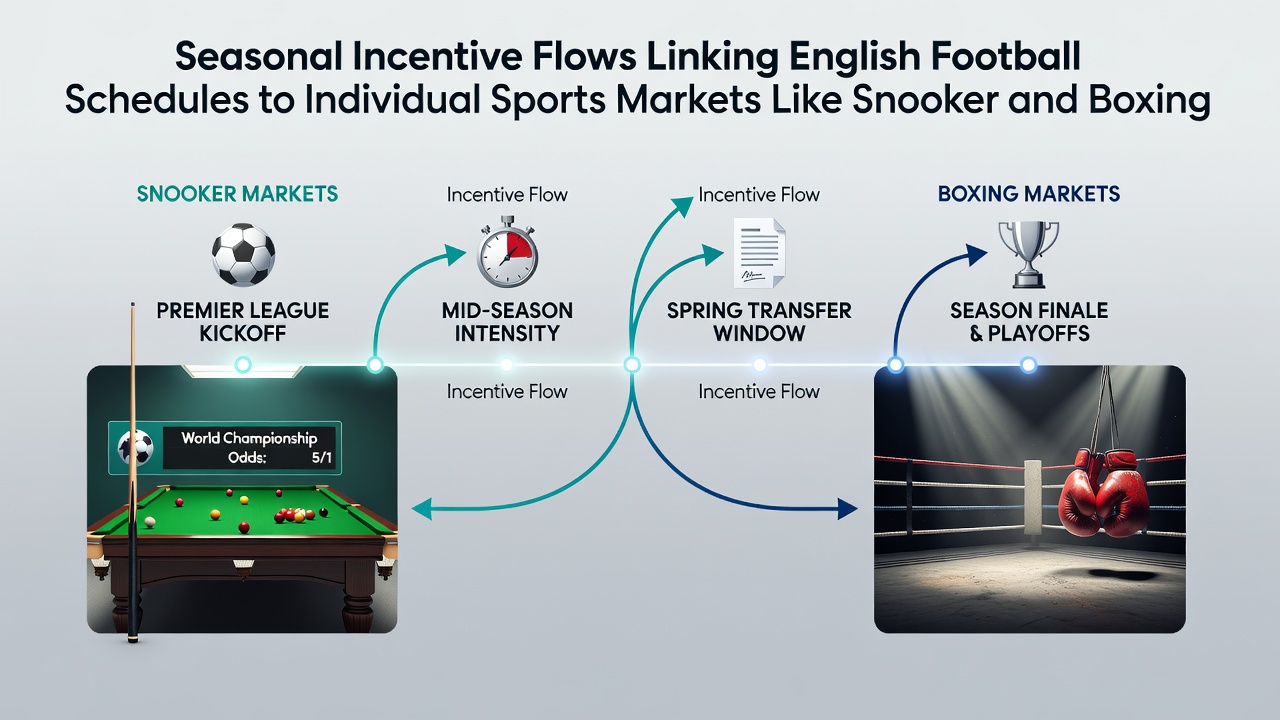
English football operates on a fixed annual cycle that begins in August and concludes in May, creating predictable gaps in live action during the summer months, and observers note how these intervals coincide with major snooker and boxing calendars to redirect promotional resources and betting activity toward individual sports. Researchers have tracked these patterns through betting volume data, which shows increased incentive structures such as enhanced odds and deposit bonuses appearing in snooker and boxing markets precisely when Premier League fixtures wind down.
Calendar Overlaps and Market Shifts
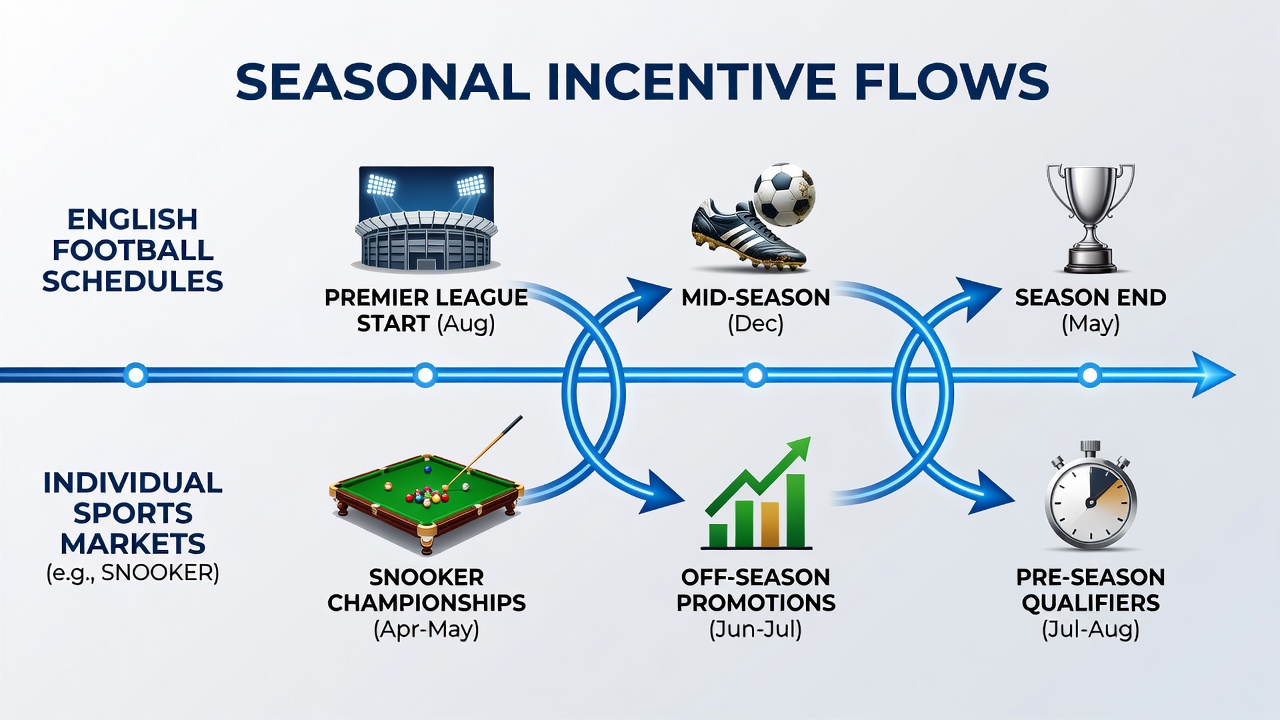
Premier League matches cluster heavily between September and December while the FA Cup and League Cup add midweek fixtures through January and February, leaving March and April as periods of sustained but tapering football engagement before the season finale. Snooker’s World Championship occupies the Crucible Theatre from mid-April into early May each year, and boxing promotions frequently schedule high-profile bouts in the same window, allowing operators to align their marketing spend with these events. Data indicates that when football interest declines in late spring, promotional budgets migrate toward these individual sports, sustaining overall platform engagement without interruption.
June 2026 presents a notable example because the FIFA World Cup will occupy the calendar during the traditional English football off-season, yet the tournament’s conclusion in mid-July will still leave several weeks before domestic leagues resume, creating an extended period where snooker and boxing events receive heightened visibility and incentive offerings. Industry reports confirm that similar patterns occurred around previous international tournaments, with operators channeling resources into alternative sports to maintain user activity.
Incentive Mechanisms Across Sports
Bookmakers structure seasonal promotions around fixture density, and when English football fixtures drop below a certain threshold per week, enhanced accumulator bonuses and cashback offers appear more frequently on snooker tournament outright markets and boxing fight props. These flows follow established rhythms: early-season football promotions dominate August and September, while post-Christmas periods see snooker ranking events receive targeted free bet allocations. Observers note that this redistribution keeps total handle stable across the calendar year rather than allowing sharp dips during football lulls.
Evidence from Regulatory and Academic Sources
Figures released by the Australian Gambling Research Centre demonstrate parallel seasonal reallocations in markets where multiple sports compete for attention, while a separate analysis from the Responsible Gambling Council in Canada highlights how operators adjust promotional calendars to individual sports when team-based leagues pause. These studies track the same underlying dynamic observed in English markets, where snooker and boxing receive elevated incentive flows once football schedules thin out.
Boxing and Snooker Scheduling Responses
Promoters in boxing time major cards for late spring and early summer to capture audiences shifting away from football, and snooker’s calendar places several European Masters events in the same window. This alignment allows betting platforms to offer consecutive weekly incentives across both sports, maintaining continuous engagement. Data from past seasons shows measurable upticks in boxing prop bet volume during May and June, coinciding with reduced midweek Premier League fixtures.
Those who monitor market activity note that operators rarely create entirely new incentive types for these shifts, instead repurposing existing football-style accumulators and enhanced odds formats for snooker frames and boxing rounds. This reuse of established mechanics reduces development costs while preserving user familiarity across different sports.
Longer-Term Patterns and 2026 Outlook
Over multiple seasons, the same incentive migration repeats with only minor variations driven by fixture congestion or international breaks. June 2026 will extend this established pattern because the World Cup’s timing overlaps with the usual post-season lull, giving operators an extended period to focus resources on snooker ranking tournaments and boxing events scheduled for that month. Historical data reveals that such extended gaps consistently produce higher proportional incentive allocation to individual sports than shorter summer breaks.
Researchers continue to document these flows through anonymized transaction records, confirming that the underlying mechanism remains consistent regardless of the specific football competition involved. The result is a stable annual cycle in which English football schedules effectively set the tempo for promotional activity in snooker and boxing markets.
Conclusion
The connection between English football timetables and incentive structures in snooker and boxing rests on predictable calendar gaps rather than discretionary operator choices. As fixture density decreases each spring, resources shift toward individual sports that maintain active schedules, and the pattern will repeat in 2026 during the extended summer window following the World Cup. This cyclical redistribution keeps betting platforms engaged year-round through measured, data-driven reallocation of existing promotional formats.