8 Jul 2026
Examining the Ties Between League Performances and Incentive Designs in Racket Sports, Cue Games, and Combat Events
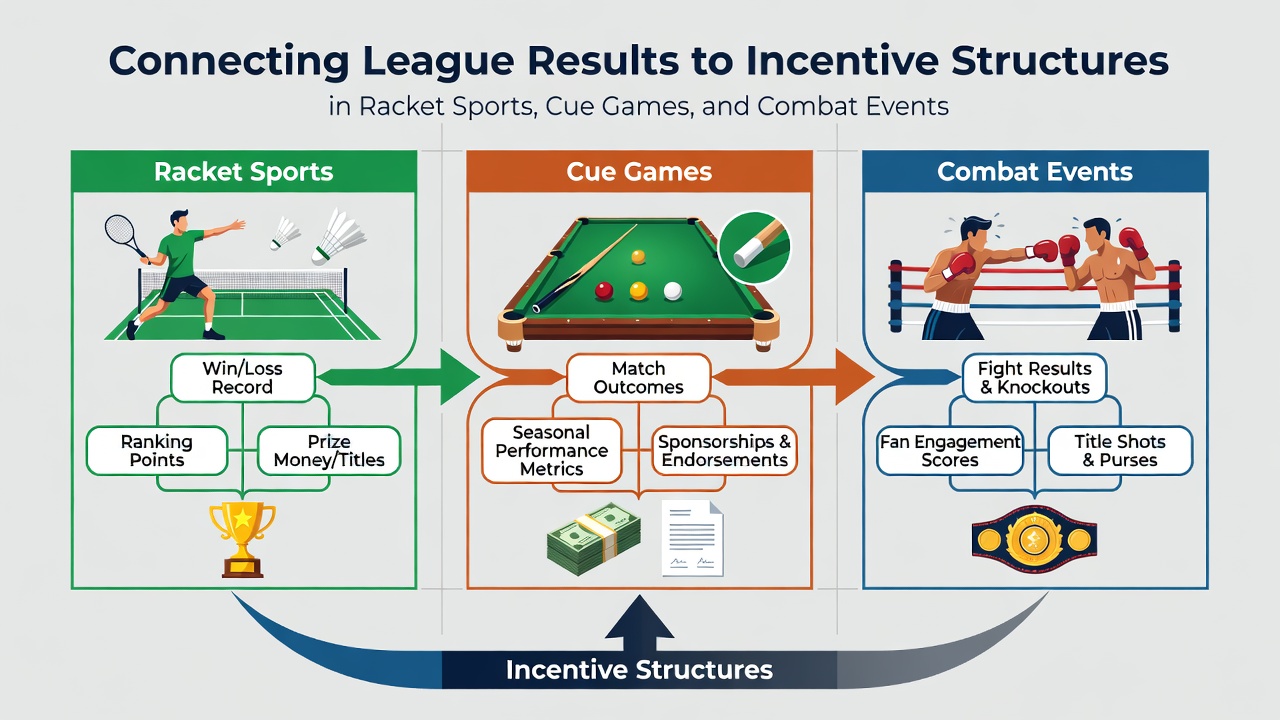
League results in racket sports, cue games, and combat events feed directly into structured incentive systems that determine prize allocations, ranking points, sponsorship tiers, and qualification pathways for major tournaments. These connections operate through governing body frameworks where consistent performance data translates into measurable rewards and opportunities across multiple seasons.
Racket Sports and Performance-Based Reward Systems
Tennis circuits such as the ATP and WTA maintain ranking formulas that aggregate points from tournament results over a rolling 52-week period, which in turn governs entry into higher-tier events and influences appearance fees from tournament organizers. Players who accumulate strong league outcomes receive elevated seeding positions that reduce early-round match difficulty while simultaneously unlocking larger shares of prize money pools distributed at Grand Slam events. Badminton and squash federations apply similar point-based systems where national league standings determine eligibility for continental championships and Olympic qualification quotas.
Research from the International Tennis Federation indicates that top-100 ranked players secure approximately 85 percent of total tour prize money each season, illustrating how league results concentrate financial incentives among consistent performers. Tournament directors adjust draw structures and bonus pools based on these same performance metrics to maintain competitive balance while attracting higher audience numbers.
Cue Games and Ranking-Driven Qualification Pathways
Snooker and pool organizations utilize world ranking lists updated after each sanctioned event, where points earned from league and tournament results determine seedings for the World Championship and other Triple Crown events. The World Professional Billiards and Snooker Association publishes official rankings that directly influence player invitations to invitational tournaments offering substantial prize funds and television exposure. Players outside the top 16 must navigate qualifying rounds whose outcomes feed back into the ranking algorithm, creating a continuous loop between results and future opportunities.
Pool leagues sanctioned by the World Pool-Billiard Association operate regional tours where accumulated points translate into invitations for the annual World Pool Championship, with cash bonuses awarded to players reaching specific ranking thresholds mid-season. Data compiled by the European Pocket Billiard Federation shows that players finishing in the top 32 of annual rankings receive an average 40 percent increase in endorsement contracts compared with those ranked 33-64.
Combat Events and Tiered Incentive Structures
Mixed martial arts promotions like the UFC maintain fighter rankings updated after each event, where outcomes determine title shot eligibility, pay-per-view bonus structures, and contract renewal values. Boxing sanctioning bodies such as the World Boxing Council and International Boxing Federation award championship belts based on mandatory challenger lists derived from regional and international league results, with mandatory defense purses scaled according to a fighter's position in the rankings. Wrestling organizations operating under United World Wrestling apply similar point systems from league competitions that feed into Olympic and world championship qualification.
Performance metrics from combat events also influence medical and training grant programs administered by national sports agencies. Fighters with sustained winning records in sanctioned leagues gain access to higher per-fight purses and revenue-sharing arrangements tied to event gate receipts.
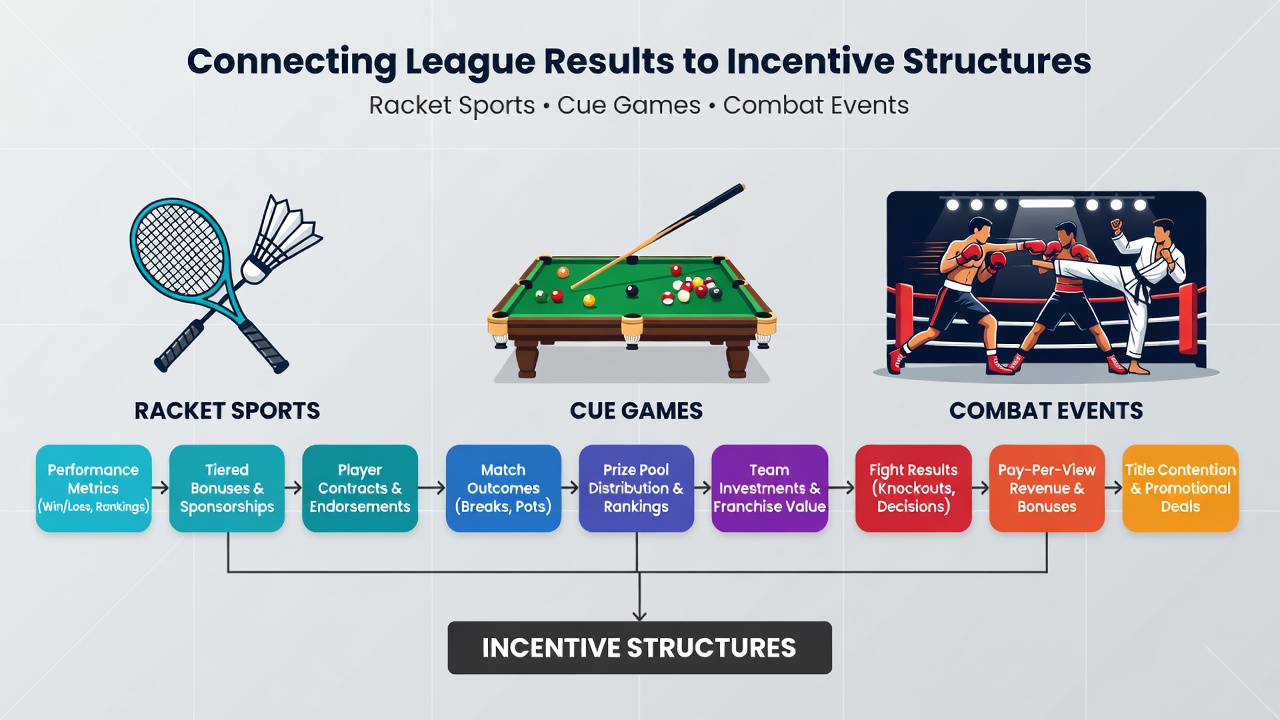
Cross-Discipline Patterns in July 2026
During July 2026 observers note that several major ranking updates across these sports coincide with mid-season incentive recalibrations. Tennis players reaching specified ranking milestones after Wimbledon gain automatic entry into the Olympic tennis event in Los Angeles, while snooker players accumulating sufficient points enter the draw for the Shanghai Masters with elevated prize guarantees. Combat promotions finalize year-end bonus structures based on league performance data collected through the first half of the calendar year.
These synchronized updates create concentrated periods where athletes and teams adjust training and competition schedules to maximize point accumulation ahead of qualification deadlines. Governing bodies publish transparent formulas that allow participants to calculate exactly how specific win-loss outcomes affect future earnings and opportunities.
Conclusion
League results function as primary inputs into incentive architectures that span racket sports, cue games, and combat events, determining everything from immediate prize distributions to long-term career trajectories. Organizations maintain these systems through regularly updated ranking methodologies and transparent qualification criteria that reward sustained performance. Data from international federations confirms that outcomes in these competitive structures directly correlate with financial rewards, sponsorship access, and progression to elite events across all three categories.