8 Jun 2026
Correlations in Major Sporting Calendars and Betting Offer Releases Across Football, Tennis, and Racing Seasons
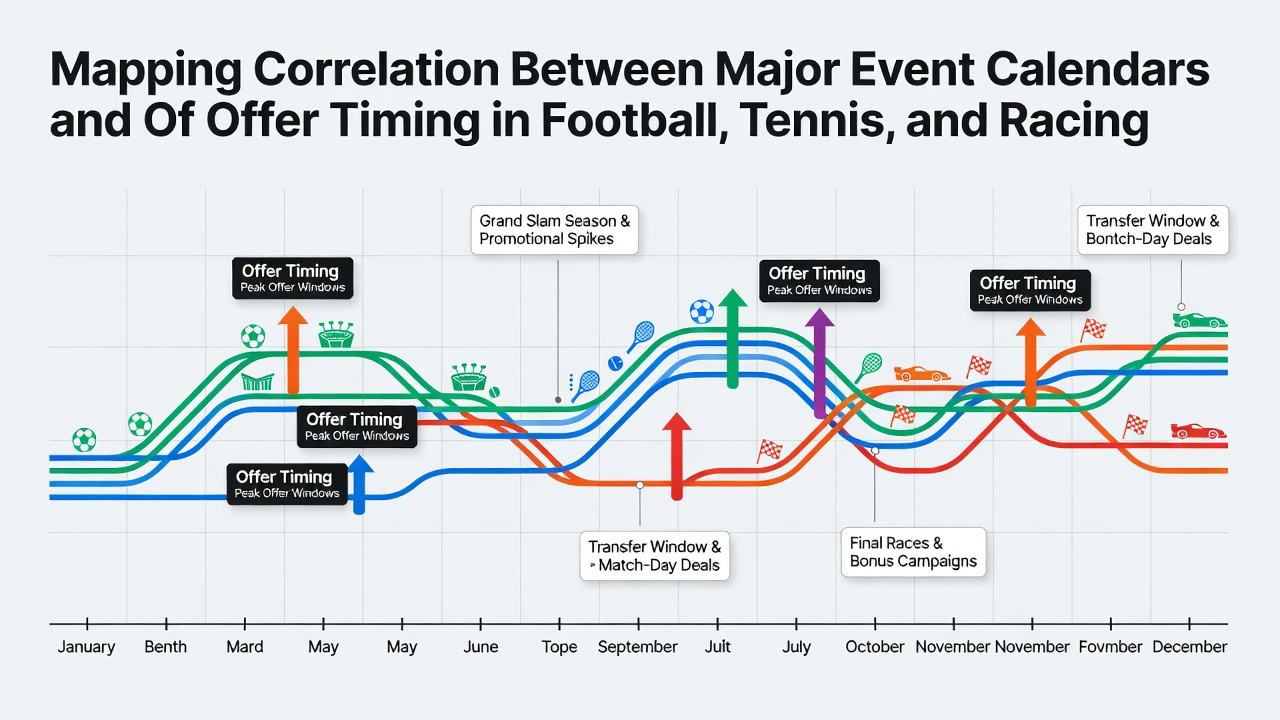
Event calendars in football, tennis, and racing create predictable windows where promotional activity clusters, according to patterns tracked across multiple betting platforms. Major fixtures drive the release schedules for deposit bonuses, enhanced odds, and free bet credits, with operators aligning campaigns to periods of elevated viewer engagement. Data from industry reports shows that release volumes increase by measurable margins during peak tournament months, particularly when several high-profile events overlap.
Football Season Structures and Offer Cadences
Domestic leagues such as the Premier League and international tournaments follow fixed annual rhythms that operators map against their marketing calendars. The winter transfer window and the run of Champions League knockout stages produce distinct spikes in promotional volume, while the summer off-season sees fewer but larger loyalty incentives aimed at retaining accounts ahead of pre-season friendlies. Observers note that June periods, including the build-up to the 2026 FIFA World Cup in North America, typically feature extended validity offers that carry through the tournament draw and opening matches.
Those who monitor release logs find that operators time accumulator boosts and cashback schemes to coincide with matchdays carrying the largest broadcast audiences. Midweek European nights often receive separate offer tiers from weekend league rounds, creating layered calendars that allow users to stack multiple promotions within a single week.
Tennis Tournament Cycles and Timing Patterns
Grand Slam events and the ATP and WTA tours generate shorter, more concentrated promotional bursts compared with football. Wimbledon fortnight and the US Open produce daily or near-daily offer refreshes, while smaller ATP 250 tournaments receive lighter treatment limited to targeted free bets on featured matches. Researchers tracking these cycles have documented that operators front-load their largest deposit-match offers in the days immediately preceding the start of a major, then shift to in-play enhancements once the event begins.
Clay-court and hard-court swings create secondary peaks in late spring and late summer, with operators adjusting the geographic focus of their campaigns to match audience interest in different regions. The shorter duration of tennis events compared with league seasons means that offer validity windows compress, requiring precise calendar alignment to avoid overlap with competing sports.

Racing Festival Calendars and Promotional Density
Flat and jumps seasons revolve around flagship festivals that concentrate betting activity into multi-day periods. The Cheltenham Festival, Royal Ascot, and the Breeders' Cup each trigger coordinated offer releases across multiple operators, with ante-post specials and each-way enhancements appearing weeks in advance. Data indicates that the interval between Christmas and the New Year also produces elevated activity around winter jumps meetings, although the volume remains lower than the spring and summer peaks.
Those who study release timing observe that operators stagger the launch of racing-specific free bet tokens to avoid direct collision with football or tennis campaigns, creating a staggered sequence that maintains continuous promotional presence. International racing calendars, including Australian spring carnivals and Dubai World Cup night, add further layers that operators incorporate into global offer planning.
Cross-Sport Overlaps and Calendar Mapping
June 2026 presents a notable convergence point where football World Cup matches, early grass-court tennis tournaments, and various racing fixtures occur within the same weeks. Operators have historically adjusted their release sequences during such periods to prevent offer fatigue, spacing deposit bonuses across different sports rather than clustering them on single days. Studies of past overlapping calendars show that staggered releases maintain higher redemption rates than simultaneous launches.
Regulatory filings from bodies such as the Alcohol and Gaming Commission of Ontario and industry analyses published by the International Betting Integrity Association confirm that transparent disclosure of offer terms increases during these high-density calendar windows. The requirement for clear expiry dates and eligibility rules becomes more visible when multiple sports compete for the same promotional attention.
Conclusion
Mapping these calendars reveals consistent correlations between event density and offer volume across football, tennis, and racing. Operators rely on fixed seasonal anchors to plan release schedules, with overlaps prompting deliberate spacing to sustain user engagement. Continued tracking of these patterns provides a factual basis for understanding how promotional timing aligns with the sporting year.