27 Jun 2026
Charting Reward Pathways in Tennis Grand Slams, Boxing Events, and National Cup Competitions
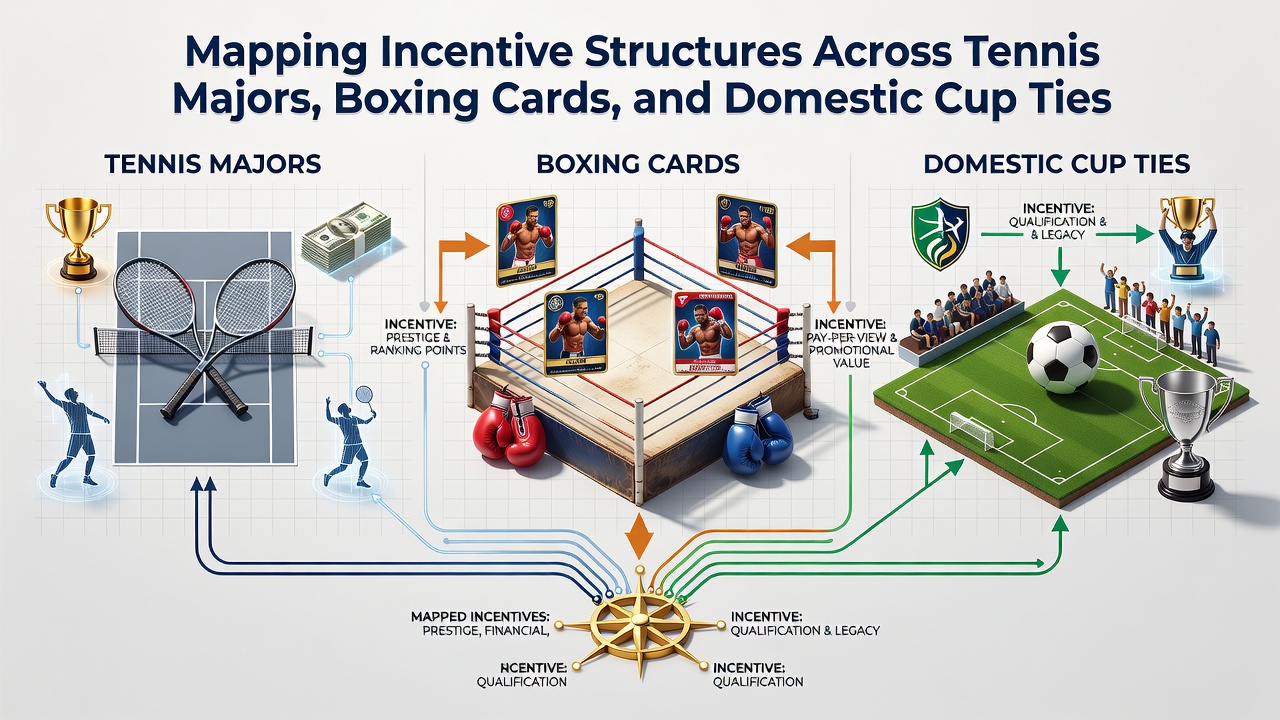
Observers note that incentive structures in professional sports shape athlete participation, performance levels, and long-term career decisions across multiple disciplines, and mapping these frameworks reveals consistent patterns in how governing bodies allocate resources. In tennis Grand Slams, boxing fight cards, and domestic cup ties, financial rewards combine with ranking points, qualification pathways, and broadcast exposure to create layered motivation systems that operate differently yet share structural similarities.
Tennis Majors and Tiered Prize Distributions
Four annual Grand Slam tournaments distribute prize money according to performance brackets that escalate sharply at later stages, while ranking points awarded by the ATP and WTA circuits add non-monetary value that influences seeding and future entry opportunities. Data from recent seasons shows total purses exceeding 50 million dollars per event, with champions receiving portions that represent roughly 15 percent of the overall fund and early-round participants collecting fixed minimums scaled to round of entry. Researchers tracking these distributions have identified that players ranked outside the top 100 often rely on qualification rounds for access, where smaller payouts still serve as critical revenue streams during lower-profile seasons.
June 2026 schedules place the French Open and Wimbledon in overlapping preparation windows for several top-ranked competitors, which creates additional logistical incentives around scheduling and recovery planning. Those who studied player calendars note that surface transitions between clay and grass amplify the value of ranking points earned at these events, since they directly affect draw positions at subsequent tournaments throughout the year.
Boxing Cards and Performance-Based Payout Layers
Professional boxing events structure compensation through a combination of guaranteed purses, win bonuses, and pay-per-view revenue shares that vary according to promoter agreements and fighter marketability. Sanctioning body rankings maintained by organizations such as the WBC and WBA determine mandatory title opportunities, which in turn trigger higher baseline payments for championship bouts compared with non-title undercards. Figures released by state athletic commissions in Nevada and California indicate that main-event fighters frequently secure contracts worth several million dollars, whereas undercard participants receive amounts tied to experience tiers and regional market size.
What's interesting is how broadcast deals and sponsorship activations further modify these incentives, because fighters who generate higher viewership numbers can negotiate percentage-based escalators that reward both victory and audience engagement. Observers tracking contract trends point out that domestic title defenses within regional promotions often serve as stepping stones, offering modest but reliable payouts that build toward larger international cards.
Domestic Cup Ties and Qualification Cascades
National cup competitions in football operate through elimination brackets that provide progressive financial rewards at each advancement stage, supplemented by additional revenue from television rights and gate receipts that increase in later rounds. European governing frameworks administered through UEFA and national associations allocate participation fees to lower-league entrants, creating entry incentives that offset travel costs for clubs with limited budgets. Australian Sports Commission reports on domestic competitions highlight similar patterns where cup success delivers both prize allocations and qualification berths into continental tournaments, thereby extending the reward horizon beyond a single season.
Those who've examined fixture lists observe that domestic cup ties often function as parallel incentive tracks alongside league play, since early-round upsets can generate unexpected revenue spikes for smaller clubs while larger teams prioritize squad rotation to manage player workload. Data compiled across multiple seasons shows that clubs reaching quarterfinal stages receive payments several times higher than first-round allocations, which encourages strategic squad investments aimed at deeper runs.
Comparative Patterns Across Disciplines
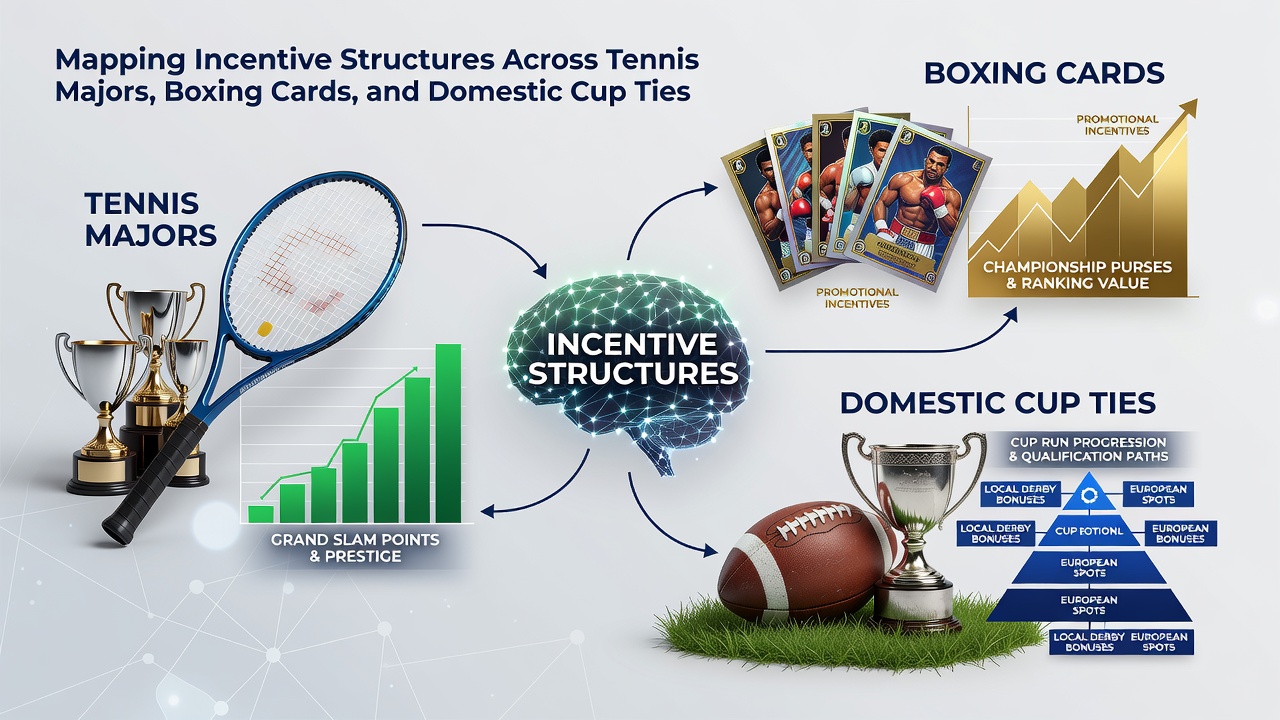
Although the three formats differ in competitive structure, common threads emerge around how early-stage incentives support broader participation while later-stage rewards concentrate around elite performers. Tennis majors emphasize individual ranking progression, boxing cards blend guaranteed pay with performance escalators, and cup ties deliver team-based revenue sharing that scales with advancement. Academic analyses from institutions such as the University of Toronto Faculty of Kinesiology have examined these layered systems and found that transparent distribution formulas correlate with higher retention rates among developing athletes across all three domains.
June 2026 calendars introduce additional variables, including potential overlaps between major tennis events and international boxing showcases, which may prompt promoters and tournament organizers to adjust timing to minimize conflicts for shared audiences and broadcast partners. Regulatory approaches in different jurisdictions, including frameworks issued by Sport Integrity Australia and the Canadian Centre for Ethics in Sport, continue to monitor how incentive structures interact with anti-doping compliance and financial transparency requirements.
Conclusion
Mapping these incentive structures demonstrates that tennis majors, boxing cards, and domestic cup ties each employ graduated reward mechanisms calibrated to performance milestones, market dynamics, and qualification pathways. The resulting frameworks balance accessibility for emerging participants with substantial returns for those who advance furthest, while external factors such as broadcast contracts and regulatory oversight continue to shape how resources flow through each ecosystem. Continued documentation of these patterns provides useful reference points for understanding how professional sports maintain competitive balance and participant engagement over time.