15 Jun 2026
Charting Incentive Patterns in English Football and Horse Racing Calendars
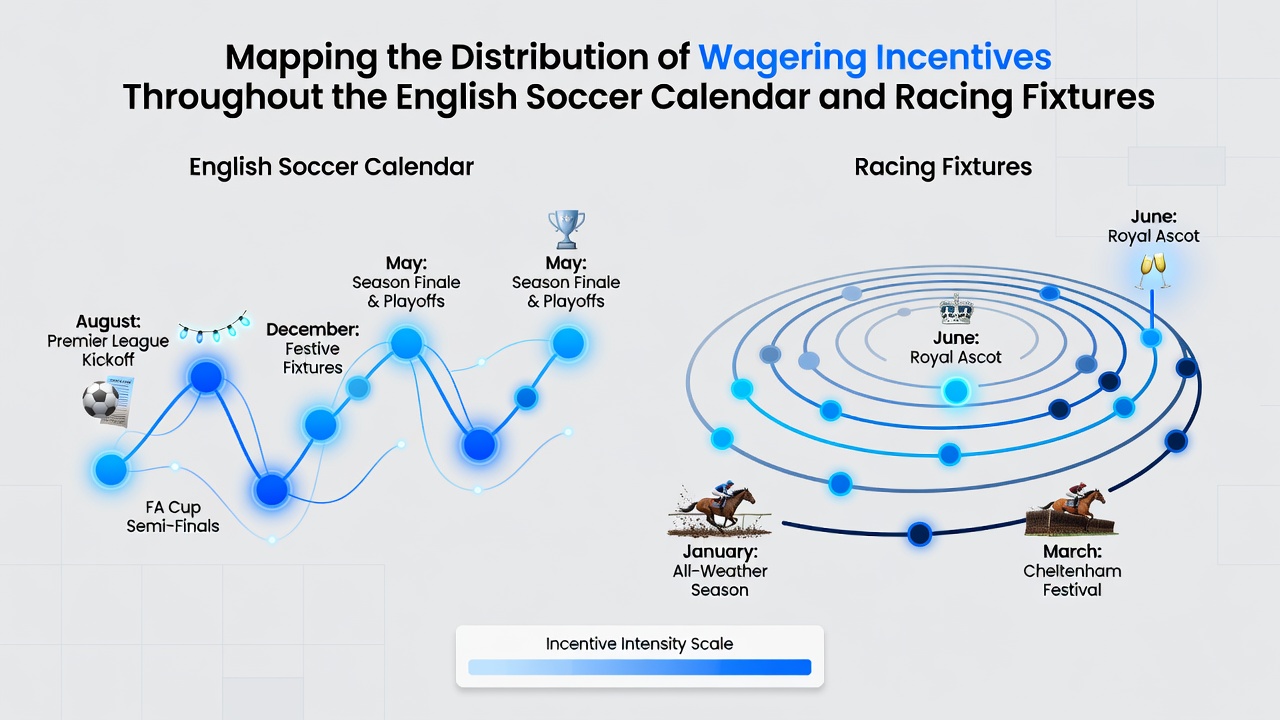
English soccer follows a structured season that runs from August through May with promotion campaigns clustered around major matchdays including the opening weekend, Boxing Day fixtures, FA Cup rounds, and the final weeks of the Premier League title race while horse racing spreads events across the entire calendar from the Cheltenham Festival in March through Royal Ascot in June and the Grand National meeting in April creating distinct windows where operators adjust wagering incentives to align with fixture density and viewer attention.
Seasonal Clusters in Soccer Promotions
August sees a surge of new customer offers tied to the Premier League launch and Championship openers as data from fixture lists show over 300 professional matches scheduled in the first month alone and operators respond by distributing enhanced odds and free bet tokens across opening day accumulators. Observers note that incentives often peak again in January during the FA Cup third round when replays and giant-killing narratives draw additional audiences and the same pattern repeats in late February and March when European competitions overlap with domestic leagues.
Racing Calendar and Offer Timing
Horse racing fixtures maintain a steadier rhythm wth incentives appearing before each major festival rather than clustering around single weekends. The National Hunt season builds toward Cheltenham in March where multiple operators release dedicated racing boosts while flat racing events at Newmarket and Epsom generate separate promotional layers in May and June. Those who've tracked these patterns across multiple years find that smaller midweek meetings receive lighter incentive coverage compared with the concentrated activity around the five-day Royal Ascot program.
June 2026 Landscape
June 2026 falls outside the domestic soccer season which concludes in May leaving only pre-season friendlies and international tournaments as potential hooks for football-related offers. Racing continues with summer jumps fixtures at Perth and Stratford plus early flat meetings at York and Haydock yet the overall volume of promotions typically declines because major events remain sparse until the July Eclipse meeting at Sandown. Operators therefore shift resources toward international soccer qualifiers and smaller racing cards during this quieter interval.
Geographic and Platform Variations
Distribution also varies by platform with exchange-style operators concentrating incentives around high-liquidity markets such as Premier League correct score and horse racing place markets while traditional bookmakers spread offers across a wider range of lower-profile leagues and meetings. A report from the Responsible Gambling Council of Ontario highlights how operators in regulated markets adjust promotional calendars according to local fixture density and audience overlap. Similar findings appear in research issued by the Australian Gambling Research Centre which examined calendar-based incentive timing in comparable sports markets.
Measuring Incentive Density
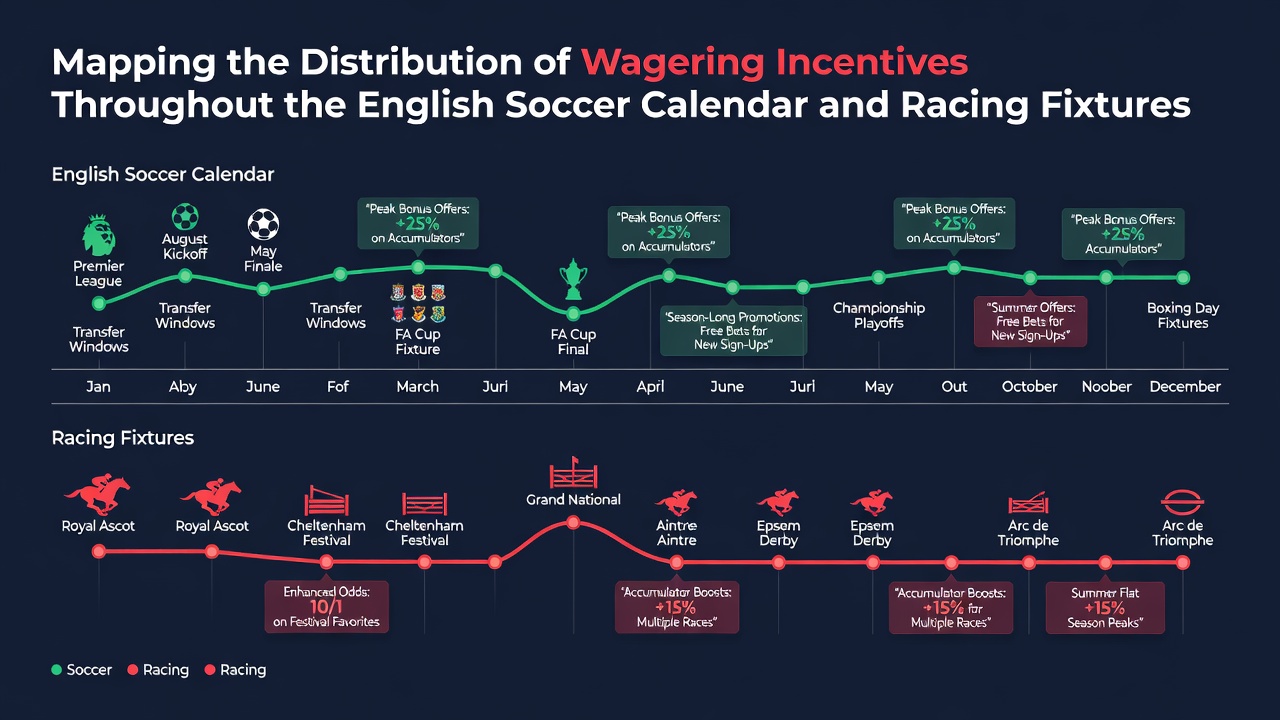
Tracking tools that aggregate daily offers reveal measurable spikes before weekends containing multiple Premier League games and before Grade 1 racing festivals. Mid-season international breaks produce shorter but sharper bursts of promotions tied to England national team matches while summer months after the soccer season ends show sustained but lower-level racing incentives. Those mapping these patterns across several seasons observe that the highest combined incentive volume occurs in April when the Grand National, Champions League quarter-finals, and end-of-season relegation battles coincide.
Conclusion
The distribution of wagering incentives across the English soccer and racing calendars follows predictable alignments with fixture concentration and audience interest. June 2026 represents a transitional low point for soccer promotions yet racing events continue to generate targeted offers throughout the month. Observers who examine these patterns over multiple years gain clearer insight into how operators time their campaigns relative to the fixed sporting schedule.